

About the breed
Breed History
The story of Scottish Folds takes us back to 1961 to a farm near Coupar Angus in the Tayside Region of Scotland, Northwest of Dundee, where a shepherd by the name of William Ross spotted a small Labrador puppy, who turned out to be a little kitten. Susie, a white barn cat, had the unusual ears, that folded over instead of standing up. Little did he know that his find would be the start of a new breed. William took the kitten home and showed it to his wife, Mary, who immediately identified one as unusual and mysterious. William and Mary threw off the farm and found themselves developing the breed. Ross contacted Pat Turner, a London breeder with an interest in feline genetics, and so a breeding program for Folded eared cats was established. At first, British cat fancy associations rejected the breed on the grounds that the Folded ears gene was compromising the health of these cats. In the early 1970s a breeding program was established in the United States and by the end of that decade, the cats, which became known as Scottish Folds, gained championship status at the cat shows and are now developed into a breed that is 50 years old.
Breed Description
The most prominent feature of any Scottish Fold cat is of course the ears, which must fold forward and downward. The ears are usually small and tightly folded, giving the cat’s head a unique round silhouette. The head shape itself is also round, with prominent cheeks, a short nose and well rounded large eyes.
Scottish Folds are hardy cats, much like their barnyard ancestors. Their disposition matches their sweet expression. They have tiny voices and are not extremely vocal. They adore human companionship and display this in their own quiet way. The Fold is an outgoing and curious cat who enjoys following his people around and being involved in whatever they are doing.You’re never lonely when you have a Scottish Fold! Folds frequently stand on their hind legs, for all the world like meerkats on a nature show, or arrange themselves in other unusual positions. Scottish Folds adapt to almost any home situation and are as comfortable in a room full of noisy children as they are in a single person’s dwelling. They also adjust to other animals extremely well.
A shorthaired Fold has a dense, plush coat with a soft texture. The longhaired (a Highland Fold) variety has medium-long to long fur with britches (longer fur on the upper thighs), toe tufts, a plumed tail, and tufts of fur on the ears. He may also have a ruff around the neck. The Scottish Fold comes in a number of colors and patterns, including solid, tabby, tabby and white, bicolor and particolor. Eye color depends on coat color. For instance, white and bicolor cats can have blue eyes or odd eyes (each eye is a different color). They weigh between eight and 13 pounds and live for 13 or more years.
Groom a shorthaired Scottish Fold weekly to keep his coat shiny and healthy. A Highland Fold should be combed twice a week to prevent or remove mats and tangles. The only other grooming the Fold needs is regular nail trimming, ear cleaning, and tooth brushing.
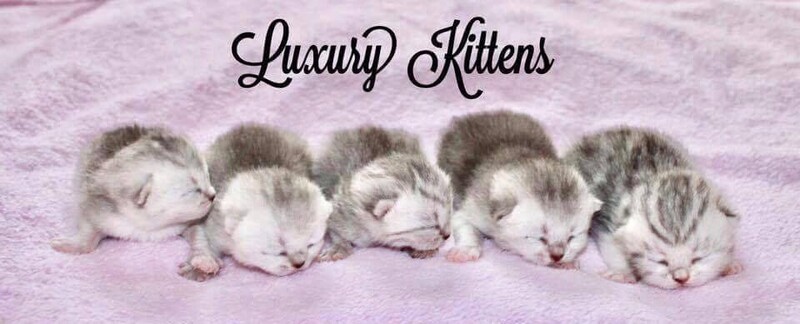
Breeding the Folds has its own rule: one of the parents must have the ears of a normal structure as only breeding a folded-ear cat to a straight-ear cat will result in a healthy kitten. All Folds are born with straight, unfolded ears, and those with the Fold gene will begin to show the fold usually within about 21 days. The kittens that do not develop folded ears are known as Straights.